Adorable Stationery: The Cute Animal on the Train Illustration
In the world of digital design, finding assets that balance whimsy with professionalism can be a challenge. We often encounter illustrations that are either too childish for a corporate setting or too sterile to evoke emotion. The Cute Animal on the Train Illustration strikes a unique chord, offering a blend of playful storytelling and clean vector execution. This design asset isn't just a static image; it’s a versatile tool for creators looking to inject personality into their projects without sacrificing quality.
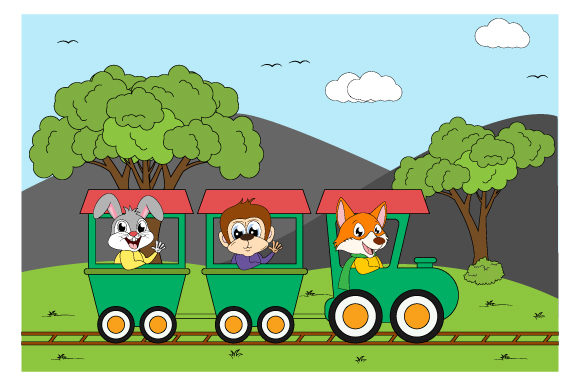
Visually, the illustration captures a delightful scene of a charming animal character commuting on a stylized train. The aesthetic leans heavily into modern vector art—clean lines, soft color palettes, and expressive character design. Whether the animal is a bear, a fox, or a rabbit depends on the specific iteration, but the "personality" remains consistent: friendly, approachable, and slightly nostalgic. It evokes the feeling of a storybook or a high-end greeting card. The style avoids overly complex gradients, making it perfect for scalable applications where clarity is paramount.
Practical Applications for Modern Creators
Understanding where to deploy an asset like the Cute Animal on the Train Illustration is key to maximizing its value. Because the artwork is vector-based, it scales infinitely without pixelation, making it a powerhouse for both digital and print mediums.
For branding and packaging design, this illustration is a goldmine for businesses targeting families, children, or the "kawaii" market. Imagine a boutique bakery, a children’s clothing line, or a local daycare center. Using this illustration on a hang-tag or a box lid instantly communicates warmth and safety. It works exceptionally well as a hero image on a website landing page or as a recurring motif in a brand's visual identity system.
In the realm of editorial design and publishing, the asset serves as a perfect spot illustration for magazines, blogs, or book covers. It breaks up text-heavy layouts, providing a visual resting point for the reader's eye. If you are a blogger writing about travel, lifestyle, or mental health, this image can serve as a metaphorical representation of "life's journey" or "enjoying the ride," adding depth to your content.
Digital Media and Social Engagement
For social media graphics, engagement is driven by emotion. Static stock photos often fail to stop the scroll, but a character-driven illustration creates an immediate connection. The Cute Animal on the Train Illustration can be used to announce "We are on our way!" for a product launch, or "Next Stop: Big Savings!" for a promotional campaign. It adds a human element to digital marketing that raw text cannot achieve.
Furthermore, in web design, this asset can enhance the user experience. It works beautifully as a custom 404 error page graphic (showing the train going the wrong way) or as a loading animation element. These small touches elevate a brand from being merely functional to being memorable and thoughtful.
Technical Specifications and Workflow Integration
A major hurdle with design assets is compatibility. The Cute Animal on the Train Illustration eliminates this friction by including a comprehensive file package. The ZIP file contains SVG 1.1 format, Ai 10 format, EPS, and JPG.
Why does this matter to you? If you are a graphic designer using Adobe Illustrator, the Ai and EPS files allow you to fully edit the vectors. You can change the color of the train, modify the animal's expression, or isolate specific elements to use elsewhere. If you are a blogger or marketer using Canva or a web builder, the SVG format ensures crisp rendering on high-resolution screens, while the JPG offers a plug-and-play solution for quick posts.
Strategic Design Pairings
To get the most out of this illustration, consider how it interacts with typography. Because the illustration has a distinct "personality," you need a typeface that complements rather than competes.
- Sans Serif Fonts: Pairing the illustration with a clean, geometric sans serif font (like Montserrat or Poppins) creates a modern, airy feel. This is ideal for tech startups or educational apps that want to appear friendly yet efficient.
- Serif Fonts: Combining the art with a classic serif font (like Garamond or Playfair Display) creates an interesting contrast. It grounds the whimsical illustration in tradition, making it suitable for a high-end children's book cover or a vintage-style invitation.
- Script or Handwritten Fonts: For maximum cuteness, a handwritten font or script font works well. However, use this sparingly—perhaps just for the headline—to ensure readability remains high for body text.
Evaluating Fit and Licensing
Before integrating any asset into a commercial workflow, you must evaluate the fit. Does the illustration style match your brand identity? If your brand voice is serious, corporate, and authoritative, a cute animal might send mixed signals. However, if your brand aims to be approachable, community-focused, or creative, this asset is a perfect match.
When working with clients, I always recommend testing design assets in context. Don't just look at the illustration in isolation. Place it on your mockups. Does it clash with your primary color palette? Does it distract from your logo design? In the case of the Cute Animal on the Train Illustration, its versatility usually allows it to sit comfortably in the background or stand out as a focal point, depending on the sizing.
Finally, always review the licensing. Since this is a premium font and asset, ensure your usage rights cover your specific needs, whether for personal hobbyist projects or large-scale commercial distribution. The inclusion of vector formats like SVG and EPS makes this a high-value asset for any creative professional's library, offering the flexibility to adapt the art to future trends and campaigns.
Ultimately, design is about communication. The Cute Animal on the Train Illustration communicates joy, movement, and friendliness. By integrating it thoughtfully into your marketing materials or publishing layouts, you bridge the gap between professional content and genuine human connection.