Jellyfish Watercolor Clipart: A Sea Animal for Every Design
There’s a specific kind of magic in the way watercolor bleeds and blooms on paper. It’s organic, slightly unpredictable, and deeply human. When that texture is applied to a subject as ethereal as a jellyfish, the result is more than just an image—it’s a feeling. This Jellyfish Watercolor Clipart Sea Animal captures that feeling perfectly, offering a high-detailed illustration that brings the fluid, graceful motion of the deep sea directly into your creative toolkit. It’s not just a design asset; it’s a starting point for a mood.
The Artistic Character of the Watercolor Jellyfish
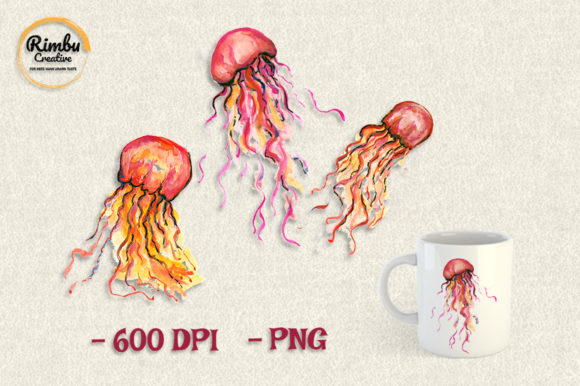
This particular Jellyfish Watercolor Clipart Sea Animal illustration is defined by its soft, translucent quality. The artist has skillfully mimicked the natural behavior of watercolor pigments, where colors gently merge and create subtle gradients. You’ll notice delicate washes of blues, purples, and pinks, with fine, tentacle-like lines that suggest movement without being rigid. The style is distinctly hand drawn, giving it a personal, artisanal touch that feels far removed from sterile vector graphics. It’s a creative font in the truest sense—not a typeface, but a visual voice that speaks of calm, mystery, and natural beauty. The transparent background is crucial here, allowing this delicate creature to float seamlessly over any surface, from a dark navy poster to a textured linen tote bag.
Where does a design element like this truly shine? Its personality is versatile yet specific. It’s perfect for projects aiming for a serene, artistic, or slightly whimsical vibe. Think of a boutique spa’s branding, a coastal-themed wedding invitation, or the cover of a children’s book about marine life. As a premium font alternative in visual form, it can anchor a logo design for a jewelry brand or a yoga studio, where the imagery of flowing water and gentle movement aligns with the core values. In editorial design, it could add a captivating visual break in a magazine spread about ocean conservation or summer travel.
Practical Applications Across Creative Projects
The utility of this Jellyfish Watercolor Clipart Sea Animal extends far beyond a single use case. Its high-res PNG at 600 dpi ensures it remains crisp and detailed whether you’re scaling it for a large-format poster or shrinking it for a delicate icon on a website. For packaging design, imagine this illustration on a bottle of artisanal sea salt or a line of bath products—it immediately communicates a natural, handcrafted quality. In social media graphics, it can stop the scroll, offering a visual oasis in a feed full of sharp, digital noise.
For entrepreneurs and small business owners, this asset is a practical investment in brand identity. A coffee shop near the coast, a marine biologist’s personal blog, or a maker of ocean-inspired pottery could all use this jellyfish as a consistent visual motif. It works beautifully on merchandise—printed on T-shirts, mugs, and tote bags—as it has a timeless, wearable appeal. The style is reminiscent of a handwritten font or a script font in its personal touch, but it exists in the realm of illustration, making it a powerful companion to clean sans serif fonts or elegant serif fonts in typographic layouts.
Integrating the Illustration: Guidance for Designers and Creators
Using such a distinctive piece effectively requires a bit of strategic thinking. First, consider font pairing. This watercolor style has enough visual interest to stand on its own, so pairing it with overly ornate or complex typography can create clutter. Instead, let it breathe alongside simple, modern typefaces. A clean sans serif font for body text provides a wonderful contrast, allowing the illustration’s detail to be the star. For headlines, a delicate serif font or a very simple script font can complement its elegance without competing.
When evaluating project fit, ask yourself about the intended emotion. Does your project need to feel organic, fluid, and calming? If yes, this is likely a strong match. For projects requiring a sharp, corporate, or highly technical feel, it might not be the right choice, and that’s okay. The strength of good modern typography and asset selection is knowing when a piece enhances versus when it distracts.
Always test the asset in context. Place it on your chosen background color or texture. How does the transparency hold up? Does the color palette clash or harmonize with your existing brand colors? This is where the transparent background proves its worth—it’s not a white box; it’s a true cutout that integrates naturally.
Finally, be mindful of the commercial licensing that typically comes with such design assets. Ensure the license covers your intended use, whether it’s for a single client project, unlimited prints for your own merchandise, or digital products for sale. This is a standard part of professional workflow and protects both you and the original artist.
In the end, the Jellyfish Watercolor Clipart Sea Animal is more than a decorative element. It’s a tool for storytelling. It can soften a brand, add depth to a layout, and connect with an audience on a more emotional, artistic level. Used thoughtfully, it doesn’t just decorate a design—it gives it a soul.